Category: psychiatry
-

2018.1 Insight #hikikomori @TheLancetPsych @drchrisharding
Mr X is a 40-year-old man who has spent half his life—the past 20 years—barely able to leave his room in his parents’ house. For many years aside from attending a monthly outpatient appointment he was asleep while everyone else in his household was awake. And while they slept he was up: whiling away time…
-
Psychiatrist Sekiguchi Hiroshi’s View of Hikikomori
“In Japan today, many young people are disconnecting themselves from society. They have come to be known as hikikomori (recluses), or more formally shakaiteki (social) hikikomori. Though their existence is widely recognized, their true situation is still far from being generally understood. They all have different backgrounds and circumstances and have withdrawn from society for…
-

Hikikomori Amazon.com Amazon.fr
Génération Hikikomori AMAZON.COM AMAZON.FR
-

Génération hikikomori en couverture de la page facebook de l’Harmattan
Génération hikikomori a été choisi pour illustrer la photo de couverture de la page facebook de L’Harmattan.
-
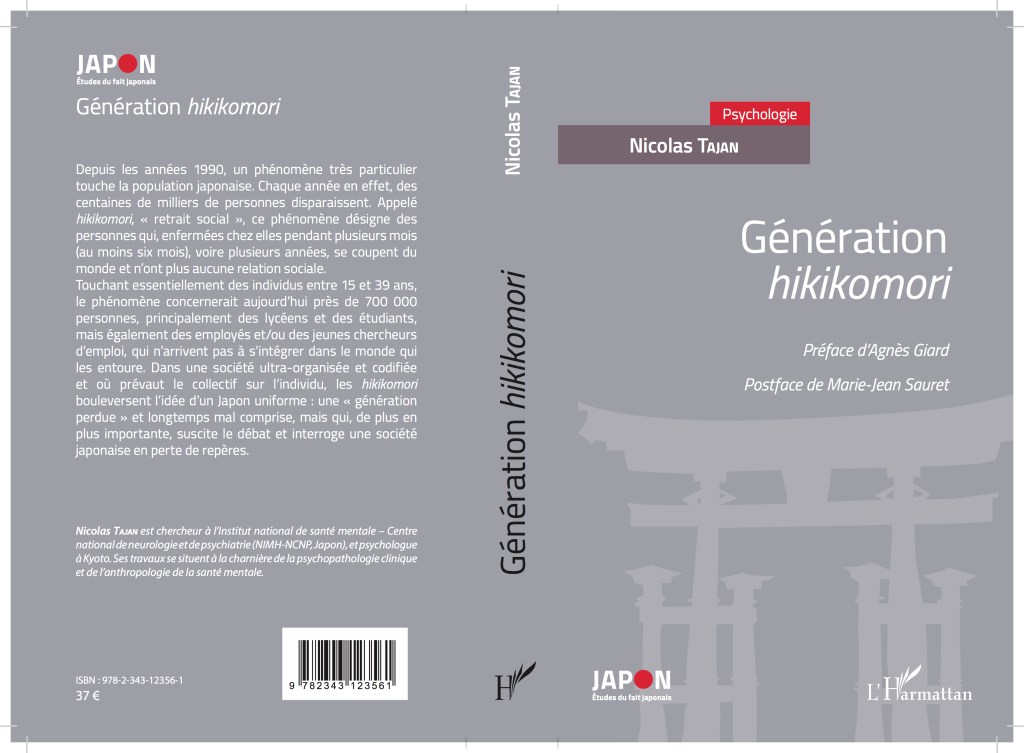
Génération #hikikomori disponible en ebook 28,99€
“Génération hikikomori” est désormais disponible en ebook 28,99€, sur le site de l’Harmattan (+ aperçu Google des premières pages). L’ouvrage sera bientôt disponible en librairie, et sur Amazon sous 3 semaines. http://www.editions-harmattan.fr/index.asp?navig=catalogue&obj=livre&no=53919
-
Génération Hikikomori : J-10
Depuis les années 1990, un phénomène très particulier touche la population japonaise. Chaque année en effet, des centaines de milliers de personnes disparaissent. Appelé hikikomori, « retrait social », ce phénomène désigne des personnes qui, enfermées chez elles pendant plusieurs mois (au moins six mois), voire plusieurs années, se coupent du monde et n’ont plus…
-
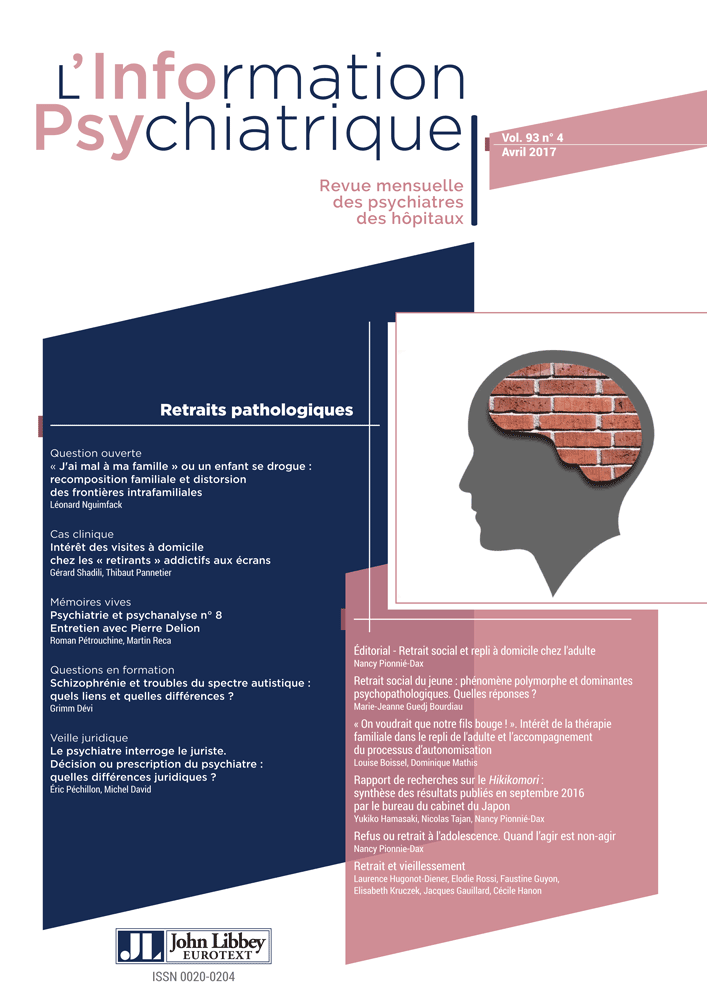
Rapport de recherches sur le hikikomori. Synthèse des résultats publiés en septembre 2016 par le bureau du cabinet du Japon (Hamasaki et al. 2017)
Revue L’information psychiatrique Volume 93, numéro 4, Avril 2017 Au Japon, le phénomène de retrait social désigné par le mot hikikomori touche un nombre important d’individus, selon les enquêtes épidémiologiques. De plus, de nombreuses personnes qui ne sont pas dans cette situation disent « comprendre le sentiment d’être hikikomori ». Face aux enjeux que représente ce phénomène,…
-

Characteristics of socially withdrawn youth in France: A retrospective study (Chauliac et al. 2017)
International Journal of Social Psychiatry Abstract Background: Poor social interactions have been recognized as a symptom since the beginnings of psychiatry. As far as socially withdrawn youth (SWY) are concerned, studies were mostly conducted on patients seeking care. Our psychiatric outreach team called Psymobile was able to reach SWY patients who were not seeking mental…
-
Transcultural psychiatry ressources (McGill)
Videos https://blogs.mcgill.ca/tcpsych/ Podcasts http://journals.sagepub.com/page/tps/podcasts
-

Traumatic dimensions of hikikomori: a Foucauldian note (TAJAN 2017, Asian Journal of Psychiatry)
Free access to my letter to the editor of the Asian Journal of Psychiatry. https://authors.elsevier.com/a/1UjO~_ggEwIEDM Clicks until May 05, 2017: free access to the article (No sign up or registration is needed) Highlights Acute social withdrawal (hikikomori) is an epidemic in Japan. There are three traumatic dimensions of hikikomori survivors: the trigger of bullying, the…
 Nicolas Tajan